Edible Architecture (Why Physics Matters in Baking)
When we talk about “building” a cake at Candy & Lace, we’re being pretty literal. While most people just see the silky fondant and the tiny sugar details, there’s actually a whole world of edible architecture hidden under that sweet exterior. Once you move past the basic round sponge, you’ve gotta trade in the whisks for a bit of internal engineering… mostly to make sure your gravity-defying dream doesn’t end up as a very expensive floor-level disaster.
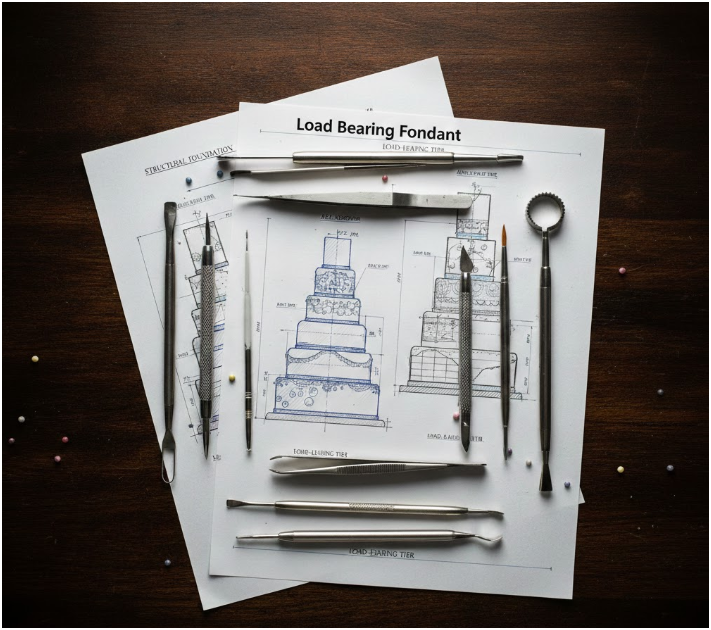
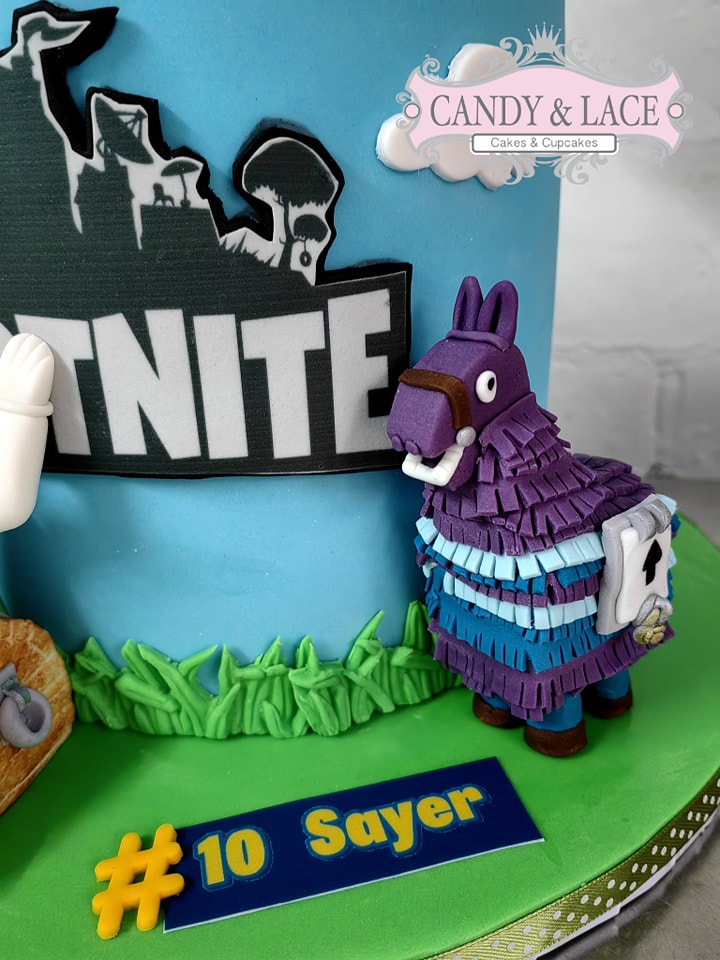
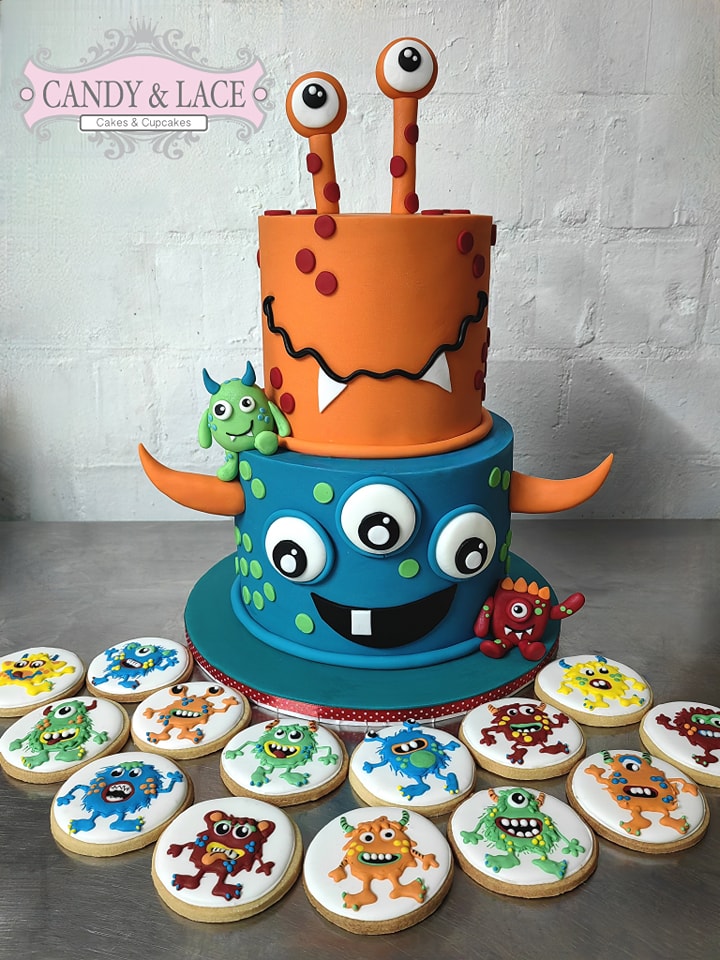
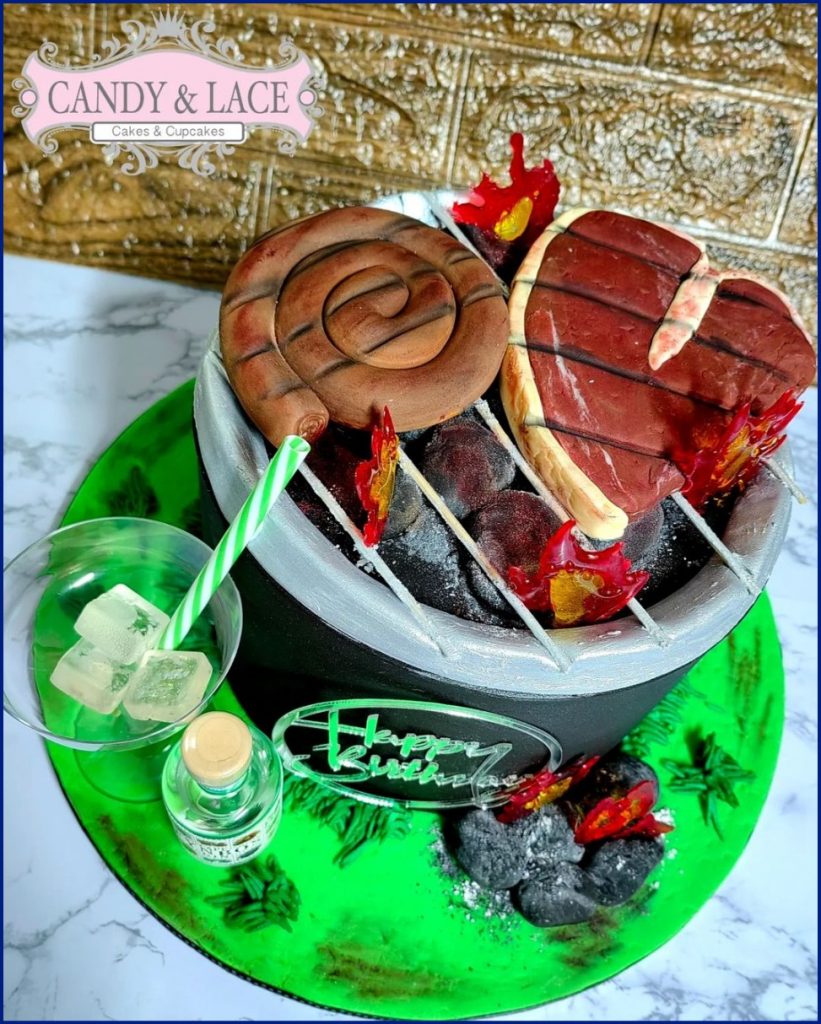
Creating a 3D masterpiece is a bit like construction work but with buttery smoothness. Whether it is a vintage car or a character with an impossibly large head, we have to build a hidden skeleton using food-safe dowels, central threaded rods, and custom-cut platforms. Think of it as the bones of the cake. These supports handle the vertical load so the bottom layers do not get squashed. It ensures the physics of the cake are just as solid as the flavor profile. It is a delicate dance between the center of gravity and a lot of buttercream (and we don’t have to rent scaffolding all the time).
Honestly, it is a total nerve-wracking thrill to see a cake stand on its own two feet for the first time (and second, and twentieth). We take a lot of pride in the fact that our structures are as sturdy as they are beautiful. It lets us push the boundaries of what dessert can actually do. So, the next time you see one of our sculpted designs, just remember there is a whole lot of math and a little bit of magic holding all that deliciousness together.
Give us a shout, questions, comments, ideas… bring it on.